
now that it is may 7, I would like to report that I am enjoying the vlogbrothers 2007 video correspondence. I am reading The Book Thief. It is good but weird, so right up my alley. I am watching the live streaming video from the International Space Station, which mostly shows pictures of Earth. Yay!
In two days I will go to Maryland. With my mother.
Wednesday, May 7, 2014

April Reviews Bring May ... ?
Reviews of recently consumed media, etc.
I can't believe it, but I'm watching MacGyver again. It's full of horrible cliches, but there is a beating heart of creativity underneath. I'll give it a few more chances.
I watched a fun film, In the Loop. It stars Peter Capaldi, who apparently now plays the Doctor in Doctor Who (I haven't seen him do this yet--still catching up on the Tennant years). Don't watch this with anybody unused to foul language. Capaldi will make his or her ears bleed. It's the story of British and American government staffers who are supposed to be working on a common project, but each person involved has his or her own ax to grind.
I just began reading Linda Simoni-Wastila's book, Pure. More later after I'm finished.
I'm also in the middle of Moonwalking with Einstein, by Joshua Foer. This is the book about a writer for Slate who ends up falling in love with the subject of expanding his memory. It's a bit of a how-to book wrapped up in the history of memory enhancing techniques, with a description of contemporary memory competitions.
Now it is May, and I have finished Moonwalking with Einstein. Linda, I'm not done with your excerpt yet. I'm done with MacGyver. It became insupportable in season 3. Now I am watching the vlogbrothers 2007 Brotherhood 2.0 videos. Delightful. I am beginning my own vlog now.
I can't believe it, but I'm watching MacGyver again. It's full of horrible cliches, but there is a beating heart of creativity underneath. I'll give it a few more chances.
I watched a fun film, In the Loop. It stars Peter Capaldi, who apparently now plays the Doctor in Doctor Who (I haven't seen him do this yet--still catching up on the Tennant years). Don't watch this with anybody unused to foul language. Capaldi will make his or her ears bleed. It's the story of British and American government staffers who are supposed to be working on a common project, but each person involved has his or her own ax to grind.
I just began reading Linda Simoni-Wastila's book, Pure. More later after I'm finished.
I'm also in the middle of Moonwalking with Einstein, by Joshua Foer. This is the book about a writer for Slate who ends up falling in love with the subject of expanding his memory. It's a bit of a how-to book wrapped up in the history of memory enhancing techniques, with a description of contemporary memory competitions.
Now it is May, and I have finished Moonwalking with Einstein. Linda, I'm not done with your excerpt yet. I'm done with MacGyver. It became insupportable in season 3. Now I am watching the vlogbrothers 2007 Brotherhood 2.0 videos. Delightful. I am beginning my own vlog now.
Wednesday, February 15, 2012
Dance Photos (Grandparent alert)
These pictures are from December, when the girls' dance school allowed the parents to come in and watch. There are stills and videos.
Eleanor's Jazz class.

Ballet


Now, Phoebe.
Ballet first.


Then a picture from the beginning of Jazz class.

Tuesday, February 7, 2012
Pictures of the MSW Robotics Team at the 2012 Maryland State FLL Tournament
The MSW robotics team is in red shirts. In some pictures, you see them from the back, with "MSW" printed on the shirts. In the first picture, you can't really see the team, but they are standing on the upper level, in the back, underneath the two yellow and black signs.

Our side of the gym.
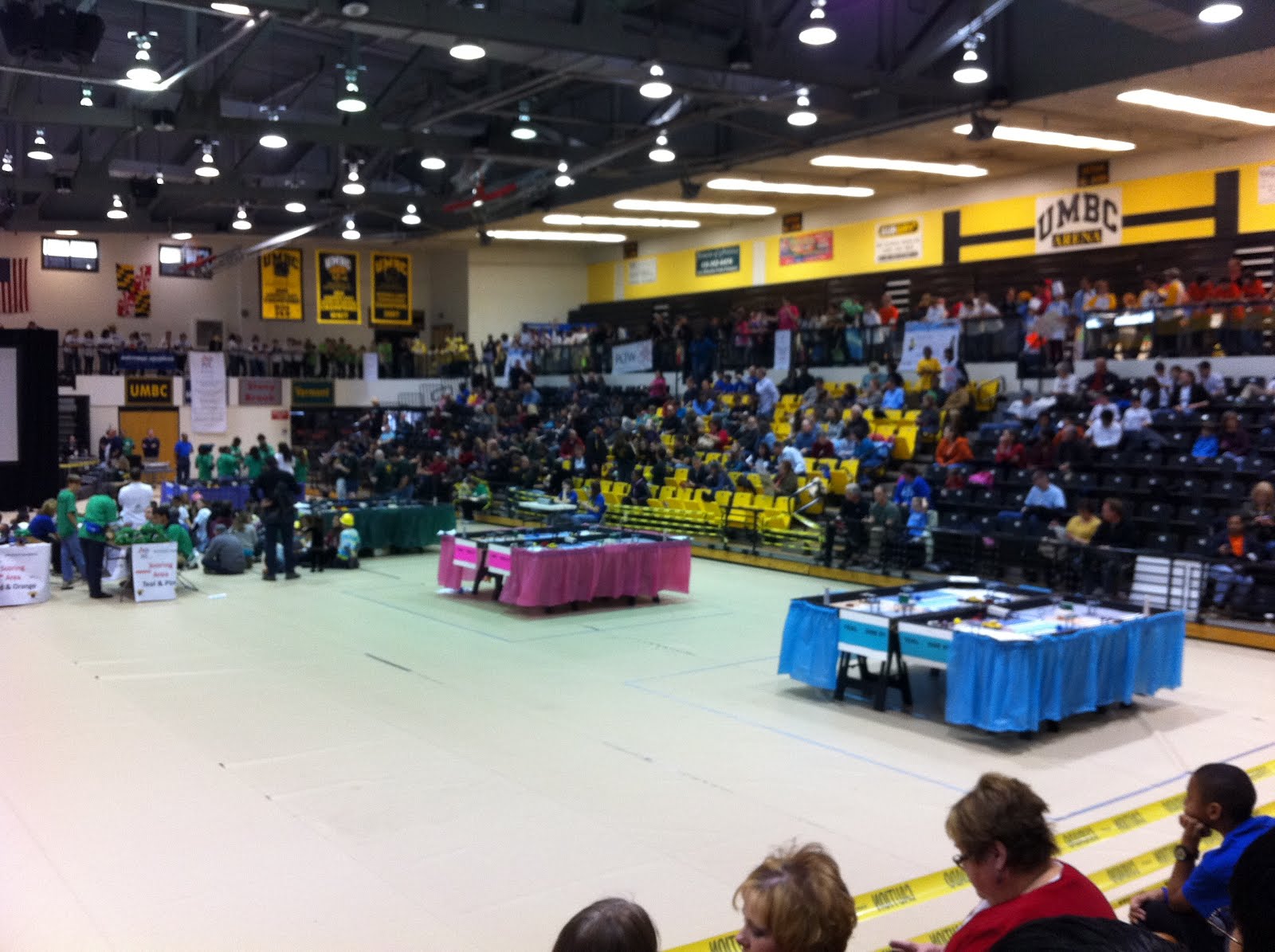
The other side of the gym.

The table.

The MSW team is on deck.

The first of a series of pictures of the team during the first two matches.

Second

3.

4.

5.

6.

7.

8.

Phoebe with Eleanor and her new participation medal, and buttons other teams have given her. Next year, our team should have buttons.
This is a movie that Fox45 took of the last regular match of the tournament. Partway through, a team mate is interviewed. After that, the MSW robot is shown knocking over some little purple Legos. After that, you can see the MSW team cheering.
Friday, January 20, 2012
Sunscreens from 2011
I'm staring at the sun blocks that are left over from the summer. I want to remember which ones are left because we bought new bottles at the end of the season, and which ones are left because we forgot to throw them away.
Sun block testing strategies included using right before getting in an outdoor pool, using right before getting in the car to go swimming, using after swimming 10 minutes and with wet skin, and occasionally remembering to re-apply after 2 or 3 hours. Some testers swam with sunscreen on for 1-4 hours. Other testers sat in the shade or stood by the pool for 1 to 3 hours. Generally, these products did not cover well on wet skin. Most have a faintly white color which will release onto the black car interior. Sun burns mostly resulted from not applying sunscreen to an area. There were very few sun burns after using sunscreen, even though it was rarely reapplied.
Sun block sprays were rejected because they were costly and wasteful, and they made testers cough.
Products were always chosen with an eye toward a higher SPF, and ingredients that protect against UVA rays (titanium dioxide, zinc oxide, avobenzone).
Products did well when they smoothed on skin easily, were easy to use on all exposed skin, didn't hurt the eyes, didn't feel strange, didn't smell horrible, and were easy to put on by younger testers. Keep in mind that a lot of products will hurt the eyes if they've been opened for a while. Once last summer's bottle has been opened, it may hurt the eyes next summer.
The best sun screens we tried last summer were (drumroll, please):
No-Ad, big orange bottle, sport lotion with a claim to water and sweat resistance. This lotion is currently replaced by their big blue bottle, which has a higher SPF. Key ingredient protecting against UVA rays: Avobenzone. I know this ingredient has been associated with an increase in free radicals, but this product smoothes on easily and stays on a long time. It didn't hurt anyone's eyes, and it is pretty cheap.
Close second: Banana Boat lotion in the big orange bottle. Another sport product that is supposed to be water and sweat resistant. Key ingredient is also avobenzone. This works just as well as No-Ad, but it is more expensive.
Best face sun screen for the extra-sensitive person: Ocean Potion's Face 45 SPF Potion. Key ingredient: zinc oxide. This cream is easy to put on and provides good coverage. It was initially rejected in favor of a stick formula, until the tester concluded that the sun block sticks didn't go on the skin as well. This cream did not hurt the eyes. The container is Recycle #7, so it may not be recyclable.
Second place finisher in the face sun block category: Banana Boat's face sun block sticks. These were easily applied and had a clear finish. Younger testers can put this on by themselves, with just a check from an older person for coverage. Key ingredient: I don't remember, probably avobenzone. Container not recyclable.
The losers?
Neutrogena Pure & Free Baby. This sun block stick probably works fine, but it has a white finish when it is applied, which some testers hated. I have two of these sticks left. I should probably just toss them because nobody will want to use them.
Aveeno Baby Natural Protection Mineral Block SPF 30. This lotion works pretty well, but it has a slightly gritty texture. You will be disappointed if you use this as a hand lotion. It is only slightly irritating to the eyes. Key ingredient: titanium dioxide. This product does not come in a recyclable container and it is a moderate to expensive drugstore product.
Biggest loser: Coppertone Water Babies Pure & Simple SPF 50. I had high hopes for this product, but when it is applied the lotion tends to stick to where it is first applied so it is hard to use quickly. It has a gritty feel, so don't use it as a hand lotion. Key ingredient: zinc oxide. Waterproof.
Note for next year: find a lotion that is inexpensive, does not contain avobenzone, and that is not irritating.
Thursday, January 19, 2012
A Recipe for Rye Bread
This is the recipe I used for my rye bread last weekend, taken from the book Recipes: The Cooking of Scandinavia, published as part of the Foods of the World series by Time-Life Books, 1974.
Suomalaisleipä - Finnish Bread
To make 1 loaf
4 packages active dry yeast (I used 3 tablespoons of yeast from a jar)
3 teaspoons dark brown sugar
1 and 1/4 cups lukewarm water
1 tablespoon melted butter
1 and 1/2 teaspoons salt
2 cups all-purpose flour
1 and 1/2 cups rye flour
1 tablespoon soft butter
Sprinkle the yeast and 1 teaspoon of the brown sugar over 1/2 cup of the lukewarm water in the bowl where you will prepare the dough. Be absolutely sure that the water is lukewarm - neither too hot nor too cool to the touch. Let the mixture stand for 2 or 3 minutes, then stir it to dissolve the yeast completely. Set the cup aside in a warm, draft-free spot for 5 to 7 minutes or until the mixture has begun to bubble and has doubled in volume.
Add the remaining 3/4 cup of lukewarm water, and, with a wooden spoon, mix in the remaining 2 teaspoons of dark brown sugar, the melted butter, salt, all-purpose flour, and 1 cup of the rye flour. When the mixture forms a smooth dough, cover the bowl loosely with plastic wrap and let it rest at room temperature for 10 minutes.
Knead the dough until it is elastic and smooth. I like to do this in my standing mixer with the dough hook. Kneading by hand works too. Butter the inside bottom of the bowl, or pour melted butter, cooled slightly, into it, then put the dough in, then flip the dough over so all sides of the dough are buttered. Let the dough rest this way, with the bowl loosely covered with plastic wrap. Put it in a warm, draft-free place for 45 minutes or until the dough doubles in volume and no longer springs back when poked with a finger.
Preheat the oven to 375F. Lightly butter a cookie sheet and then sprinkle the cookie sheet with rye flour, turning the cookie sheet over to knock off any excess flour. Shape the dough into a round, flat loaf, 9 or 10 inches in diameter, and set it on the cookie sheet. Bake 1 hour, or until the bread has a dark brown crust and a toothpick or skewer comes out dry and clean. Remove to a cake rack to cool, and serve, if possible, while the bread is still warm.
Friday, July 15, 2011
Review of a bit of Michel de Montaigne
Last night the book club discussed four essays by Michel de Montaigne, who published the first edition of his essays in 1580. As his name suggests, Montaigne was French; we read an English translation.
Of Cannibals
Of Cruelty
Of Repentance
Of Experience
Montaigne writes about himself, rather than about any single topic. He even says so. He says that although he isn’t an expert about anything else, there is one topic of which he is the supreme master: Michel de Montaigne.
Although the barriers of time, culture, and translation make it challenging to begin reading Montaigne, he writes about the same issues we talk about today: the law, virtue, cruelty, xenophobia, finding the right path through life. In fact, just when I said to myself, This topic is as fresh today as it was in 1580, Montaigne would add a quote from Seneca, who lived 4BCE--65AD. There is a huge advantage in recognizing the eternal nature of our problems. Montaigne probably admired Stoicism because of its focus on virtue, but our reading did not show him to think he was a perfectly virtuous man.
Montaigne does not initiate a topic, describe it fully, explain the advantages and disadvantages, and prescribe a solution. Instead, reading his essays is like listening to a good friend after dinner. He might give an anecdote related to the topic, as in “Of Cannibals,” and then just begin writing. Recent experience, old experience, stories he’s heard, people he’s met, all become part of the story. He explains that strangers have strange customs. If they were people we knew, their customs would seem ordinary and proper. We are also distracted by unimportant details. If a person from a strange land has lots of virtues which we respect, we may still point and say, But he’s not wearing any pants!
Of Cruelty is mostly about defining virtue, although Montaigne does give several examples of cruel punishments. He suggests that cruel punishments are enacted for the benefit of the crowd watching, not for the prisoner. It would be better to torture the body of a criminal after death, than before, because torturing a person, even a criminal, only underlines the cruelty of the punisher and the crowd.
Montaigne contends that virtue is not virtue unless it has been tested. If you live a quiet life at home and have everything your own way, how can you call yourself virtuous? A person needs temptation and trial to show virtue.
Of Repentance is about finding the right model to follow for living your life, but it also makes a curious statement that has been borne out time and again: “Natural inclinations gain assistance and strength from education; but they are scarcely to be changed and overcome.”
Of Experience starts off by comparing reason with experience, in the pursuit of knowledge. Reason is better, but experience is what we use when reason leaves us high and dry. Then the essay moves on to complain about the system of justice that has too many laws, and the system of following legal precedent which ignores the fact that no two incidences are truly the same.
Subscribe to:
Posts (Atom)